
In an increasingly digital world, link performance can determine the extent of success a marketer achieves in their work. Whether one is talking about efficiencies in campaigns, about using SEO to bring even a larger audience into the fold, or tracking overall engagement with one's audience, link analytics provides all the information one would need. This blog will provide all you need to know about link analytics, what you need as tools, and the best practices you should adopt in tracking and optimizing links for maximum results.
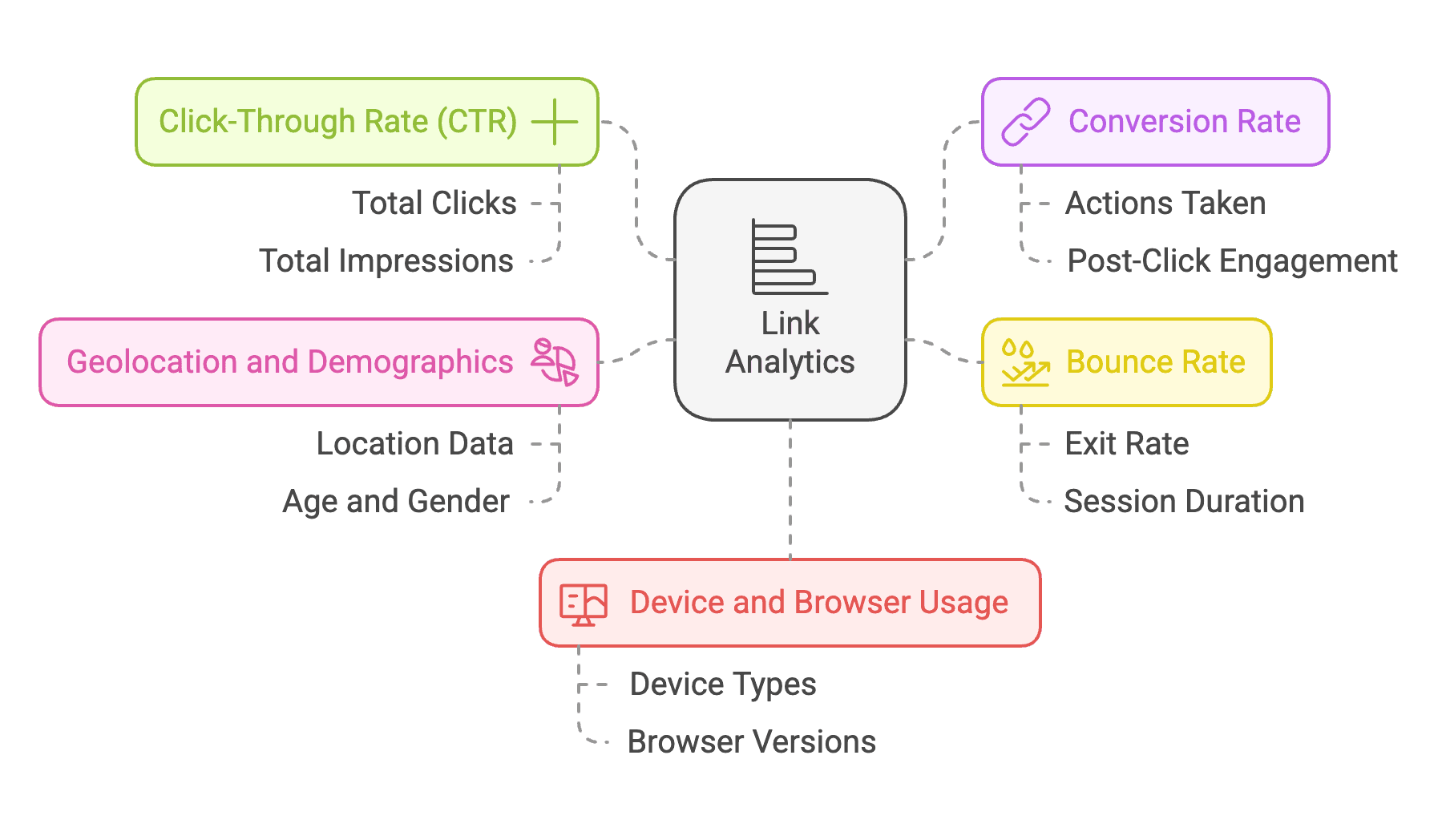
Link analytics is basically about taking and understanding measurements and otherwise interpreting data from your hyperlinks. This includes understanding how users interact with your links and what the insights gained provide to inform your strategy. Some of these metrics are listed below:
Total percentage of users that clicked your link over the total number of users who saw it.
Understand what is yielding results so that focus can be put onto tactics that work.
Bring your locking and link schemes into resonance with what activates most intrigue in your audience.
You ensure that your marketing budgets are going to be translated into superior results through data-driven decisions.
Start with link analytics; get a series of fundamental tools. Some of the best-known tools include-
Tracks user behavior across your website, including link clicks.
Offers detailed reports on traffic sources, conversions, and audience demographics.
Provides real-time analytics for all links.
Tracks clicks, geolocation, device types, and time of activity.
Offers a user-friendly dashboard to monitor performance metrics effectively.
Also Read - 10 Recent Trends In Marketing 2025
To track your links effectively, follow these steps:
Add UTM tags to your URLs for campaign tracking. Example: ``` https://example.com?utm_source=facebook&utm_medium=social&utm_campaign=summer_sale ```
Tools like Shrno, not only shorten links but also enable detailed tracking.
Maintain a spreadsheet or use a dedicated tool to manage and monitor multiple links.
Once you’ve set up tracking, focus on analyzing the data:
Challenge: Variations in data between tools.
Solution: Use a primary tool (e.g., Shrno) and validate data with secondary tools.
Challenge: Limited tracking capabilities on platforms like Instagram.
Solution: Use tools like Shrno to aggregate multiple links and track clicks.
Challenge: Balancing analytics with user privacy.
Solution: Ensure compliance with GDPR and other privacy laws by anonymizing data and obtaining consent.
Tools powered by artificial intelligence will offer predictive analytics, helping marketers optimize links proactively.
Expect more granular data to tailor content for individual users.
As platforms like the metaverse grow, link analytics will evolve to track interactions in these environments.
Link analytics is no longer optional in today’s competitive digital landscape. By understanding your audience’s behavior and optimizing your links, you can unlock significant marketing potential. Start with the tools and strategies outlined here to stay ahead in your analytics game. Remember, data-driven decisions lead to measurable success.