
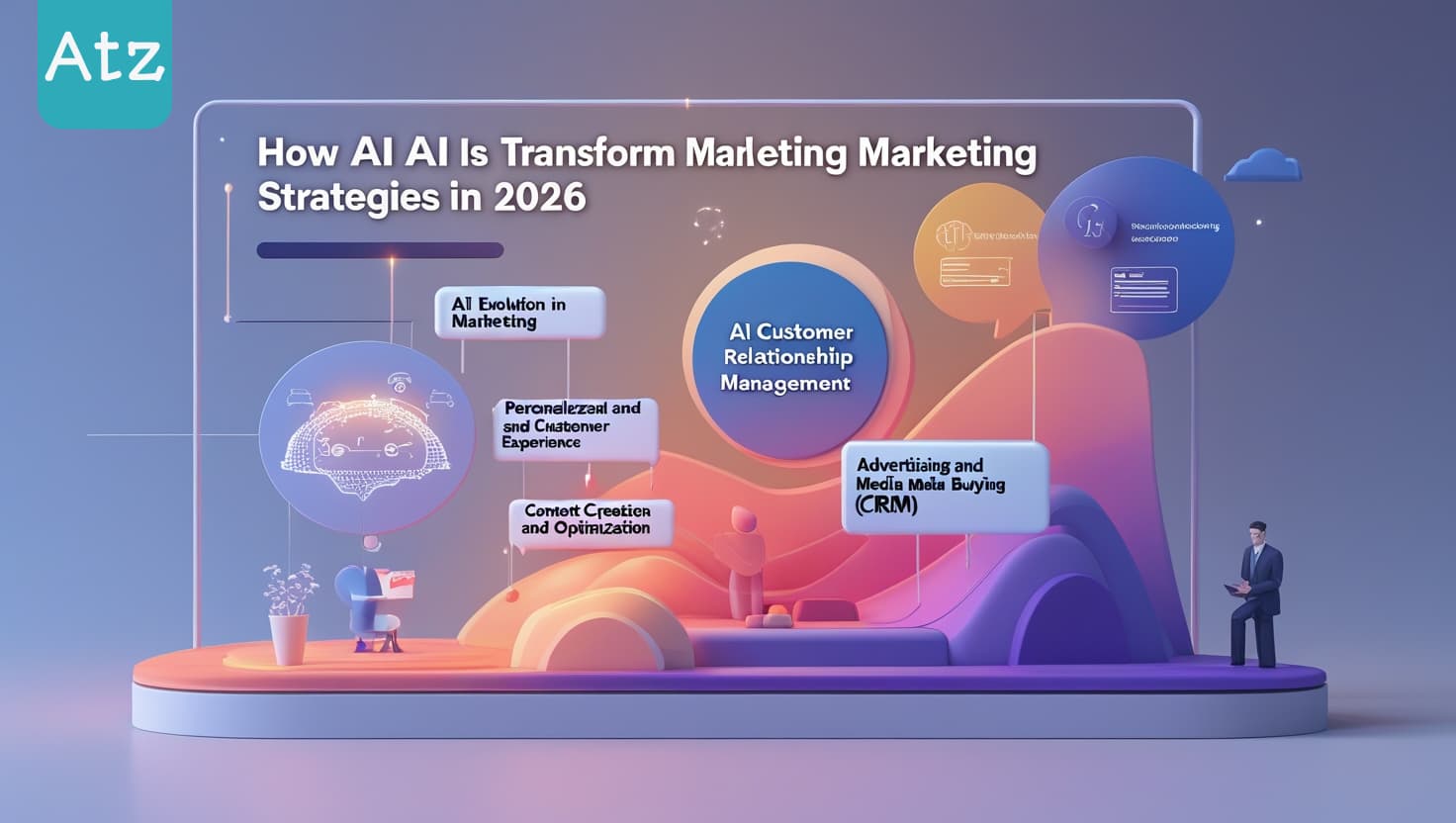
Imagine a world where well before you have even thought of what you want or need, brands know exactly what you need or want and can provide for you. A world where your marketing isn't just an interruption and annoyance but a tool for a good guide, something helpful that is relevant and personalized. This is cherished and anticipated by artificial intelligence (AI) in marketing: deeper connections and more meaningful interactions.
AI is definitely growing and laying transformational force across industries in so many ways-on how businesses run, how they innovate, and how they interact with their audiences. Within marketing, however, AI doesn't lead a game change; it promotes it. The tools and technologies offered are absolutely stunning in the way they allow one to personalize and data-driven strategies far beyond what traditional means have offered. Campaigns that adjust in real time for maximum impact and experiences designed perfectly for your individual preferences are grasped by AI gently nudging us towards that delightful future.
AI marketing is not simply to improve efficiency but to foster genuine connections. By analyzing the endless amounts of data, gracefully automating mundane repetitive tasks, and predicting insightfully, AI provides the tools for the marketing-mind attuned to what matters most—creation, strategy, and nurture. Let it march so human ingenuity is shown. The results enhance customer experiences, which let them feel special and thought about, and smarter decisions help all; it also results in a very gentle competitive advantage to today's twisting-of-the-world-competition marketplace.
This blog is a means to understand all the ways AI has touched marketing strategies.
Artificial Intelligence (AI) is a digital reproduction of cognitive human intelligence processes. In general, AI is capable of performing tasks that typically require human intelligence such as logic, problem-solving, learning, prediction, and understanding a language.
The origins of AI in marketing were on the frugal side, with automation and analytics tools being rudimentary and basic. It has since upgraded and now markets through a better mechanism of hyper-personalization, making real-time customer engagement plausible and enabling the use of predictive analytics. More than 80% of the marketing experts assert that AI has become indispensable in gaining competitiveness. From chatbots to advertising programmatic, AI has now evolved from being a convenience feature to a strategic essential.
Analysis of big data is the forte of AI as a tool that digs out the patterns from vast datasets and converts them into models that drive insights actionable by marketers to:
The biggest advantage that AI offers to marketers is the ability to provide hyper-personalized experiences. Thus, real-time AI-powered user behavior analysis can:
AI-based models such as ChatGPT and Jasper AI technologies help marketers draft blogs, social media posts, and ad copy and optimize their content:
With AI, advertising, in general, has been transformed to programmatic buying of media to ensure that the ads reach the right target group at the right time, all supported by activities like:
AI technology in CRM systems can revolutionize customer segmentation and interaction. Such systems aid:
AI integration in CRM systems improves customer segmentation and engagement. These systems:
Automation of repetitive tasks frees marketers to delve more into strategy.
The AI analytics results in a knowledge-based strategy.
Customized interactions contribute to establishing trust and loyalty.
Automation would directly reduce operational costs and, at the same time, increase the ROI.
Indeed, the potentials of AI are huge but marketers need to navigate some problems such as:
Transparent collection and use of data are some of the concerns.
As with every other thing, the AI tool should be well-nourished with the correct type of data.
Making sure that the customer interaction is as authentic as possible.
Shrno is a complete URL shortening and link management utility powered by AI that can be utilized to make significant improvements in marketing endeavors. Within its features are the keys to:
Shrno enables users to shorten, manage, and monitor links, hence making it simple for sharing and tracking.
Users can personalize the link with the domain of their brand, ensuring a smooth and professional online presence.
Shrno’s AI enhances every link with smart insights and contextual understanding, enabling the generation of valuable data on performance such as through-click rates, geographic data, and user engagement statistics. Analytics: The platform delivers real-time analytics, giving users the opportunity to check and analyze performance metrics. This is actually the specialization that aids optimization of marketing strategy.
With the help of Shrno, it will be possible to develop interactive QR codes that promise user engagement and bring them to the wanted content, thus achieving the wider marketing reach.
Shrno makes a further segment as it supports the use of tracking links with UTM parameters that give one insight into campaign performance in specific detail.
It allows a user to shorten many URLs at once for those campaigns at a large-scale.
One can make the links secure with a password such that the only intended audience is able to access the information.
Although custom domains can be utilized by Shrno, the byproduct can be better-built trust and recognition.
Among these functionalities, there are examples to avert organizational conversion from Shrno to producing. Shrno empowers marketers to develop and deliver memorable links, dig deeper into the audience, and improve the performance of contests. The analytics and personalized content generation from AI make it a great instrument to any enhancement in marketing with the technology driving i!
Artificial intelligence has brought up various options that can totally reform marketing and advertising that of combining AI techniques such as generative AI, and models based on deep machine learning to further change the face of the marketing landscape. This will allow businesses to really stay ahead. Frame the future like this- Residents in the business space have to:
1. Integrate AI tools to remain in competitive standing.
2. Upskill the existing workforce to exploit AI to the fullest.
Also Read - 10 Recent Trends In Marketing 2025
AI has become a reality and is no longer a thing of the future for it is fundamental parts of a modern marketing strategy. The ability to automatically fit customer intentions, customize responses, and deliver data insights into AI imparts a potential efficiency and level of engagement that no other style can achieve so far. Future marketing regards those who integrate AI into their strategies as the future pacesetters. Happy Marketing!
1. In what areas is artificial intelligence revolutionizing marketing?
The very sophisticated content creation, email campaigns, social media management, and programmatic advertising are processes that benefit from artificial intelligence-driven marketing automation (the mechanism of optimizing ad placement and timing). Through this, workers focus on trend analysis and their creation skills, not on mere operational tasks.
2. What constitutes a strategy for an AI transformation?
An AI Transformation strategy is a forward-looking approach where companies usually infused AI in their operations, products, and services. This incorporation is supposed to promote innovation and increase productivity ultimately leading to the growth of the company.